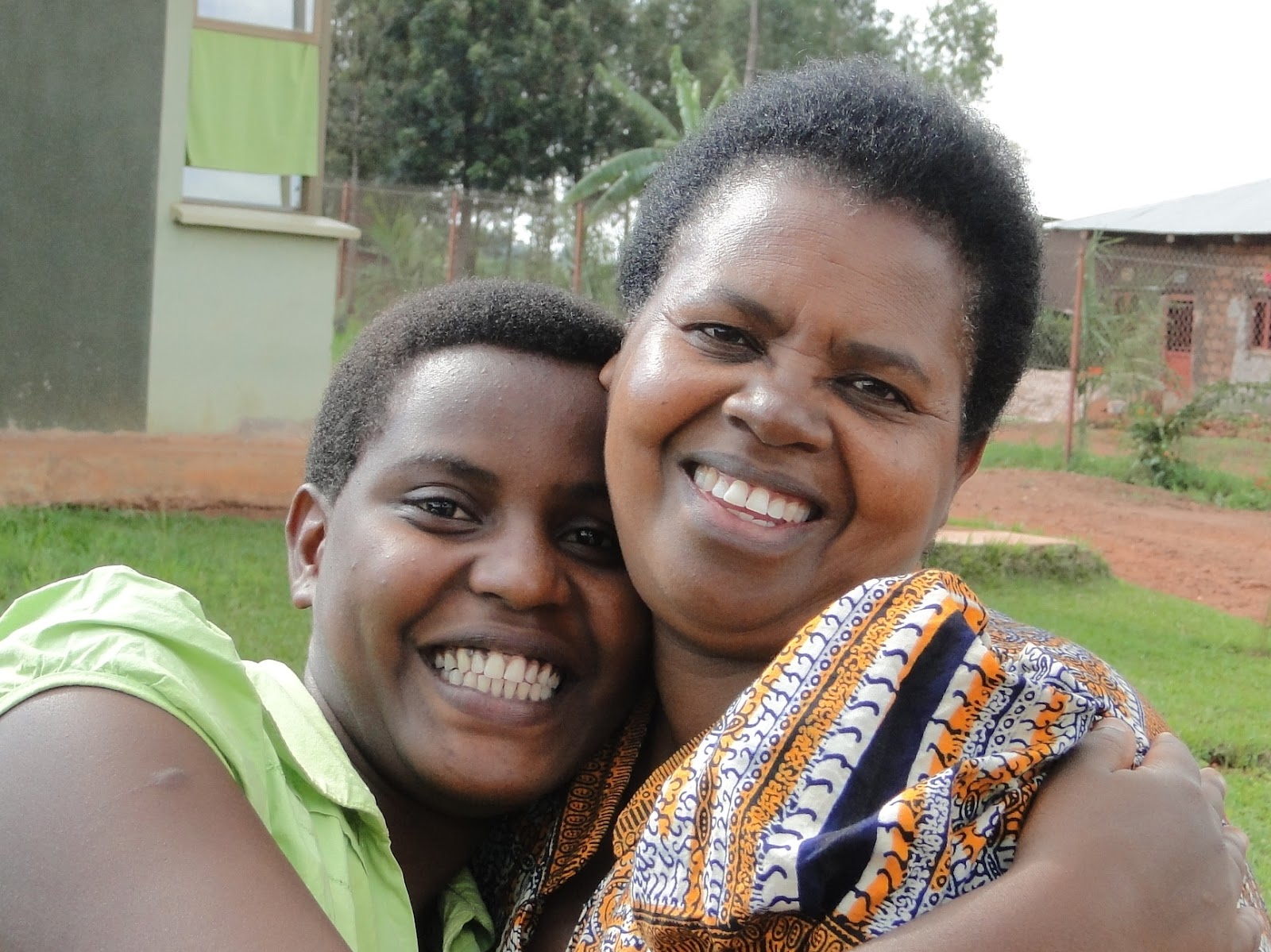
Monday, October 29, 2012

have a little faith


Yesterday I put on my custom-made Rwandan dress and I went to church – yes, I said church.  Faith is a huge component of restoring the rhythm of life here in the Village and until yesterday, I was not ready to face it up close and personal, in a formal setting.  My faith has certainly been tested in the past, and although it was shaken to its foundation in July 2011, I never fully abandoned it, even during the darkest hours of my grief.   I am not a religious person, but I am spiritual and there have been only a handful of days during my life when I have gone to sleep without praying and having some kind of faith.    

When I left my life back in the States to move to Rwanda for the year, a dear friend (and Rabbi) whom I leaned on quite a bit during my “questioning God” phase of grief put forward a statement as I readied to say goodbye to him.  He said that maybe my time away in Rwanda would somehow bring me closer to my faith, thus providing me with more answers than questions, and more comfort than pain.  I remember raising my eyebrows at his notion and sort of shrugging it off while skeptically saying, “maybe?”  Nearly one year later, I am starting to see his point and beginning to think that he was on to something when he spoke those words to me.  He is a Rabbi after all, and I suppose I never should have doubted him in the first place :)
 
Something Rwanda and this Village (and the church service yesterday morning) advocates is forgiveness.  It is spoken of at length, and there have been many times during this year that I have had to remove myself from discussions about forgiveness because I can’t help but think about my own struggle when it comes to how I think about and judge the girl who killed my brother.  I listen to accounts from students in the Village who have chosen to forgive their parents’ and siblings’ murderers, the people who decimated entire generations of their families and caused them to be deemed orphans, people who caused them unimaginable terror and trauma.  I shake my head in disbelief and amazement at their ability to forgive.  Maybe it is something they need to do in order to focus on their future and not dwell on their past.  Maybe they are more resilient than I am.  Maybe they are more kind-hearted than I am.  Maybe they have just had more time to come to terms with the hurt.  Being surrounded by a forgiving culture has impacted me and made me reflect quite a bit about forgiveness, however I am not ready to forgive, and quite honestly I don’t think I will ever be in a place where I will feel the need or ability to exonerate the girl who took my brother’s life.  I have never been one to easily, or ever forgive those who have wronged me, caused me pain, or shaken me to the core, and I am ok with that.  I don’t dwell on many personal attacks that have been inflicted upon me and therefore I see no reason to forgive those people.  I simply write them out of my life and move forward.  The girl who killed my brother is different.  She indirectly hurt me by hurting my brother.  She injured me in such a way that I will forever be a different person.  I will evermore be broken in some small way, and incomplete without my brother in my life.  She caused irreparable and irreversible damage to this world, and there is no part of me that has any inkling of forgiveness for her.  

Although the church service yesterday morning didn’t change my stance on forgiveness, it did fill me with a heightened sense of hope, love, and joy.  The service lasted 3 hours, with the first 2 hours being filled mostly with songs of worship and praise.  Nearly 100 of us were seated on the balcony of the dining hall, overlooking the Village and the surrounding hills and valleys as a gentle breeze blew through the open-air space.  Each time the students sang, goose bumps appeared on my arms and I was filled with a strong sense of something thrilling and delightful.  The songs were sung with so much passion and heart.  The entire congregation was standing as people stomped their feet, clapped their hands, raised their arms in praise and swayed to the wonderful African rhythms.  It was absolutely glorious!  I couldn’t stop myself from smiling and clapping along as I watched the students come alive and release themselves through the power of song.  These same students are the ones I see sitting at lunch after 6 hours of school, looking so preoccupied and absorbed by stress and strife and the weight of the world.  In church these kids were liberated and uninhibited and danced, danced, danced to thank God for all that He (Rwandans strongly believe that God is a man) has given them.  

The final hour was devoted to sermons, words of thanks by individual students, and a rousing song during the “offerings” period where students came forward with small monetary donations and placed the coins in the offering basket.  The contribution that each student brought forward should make you pause – remember that these students are THE most vulnerable youth in Rwanda, a country with a staggering percentage of people living in poverty, and here they were giving an offering to the church.  It was moving, to say the least. 

One of the Village Directors always advocates for students to believe in a higher power.  He doesn’t insist on them believing in God or going to church, or having a religion, but he encourages them to have faith.  He reminds them that they are each in the Village for a very specific reason and it is not by chance that they were selected.  They are THE chosen students, 500 in total, out of a country of millions of orphans.  Each day I look around at these chosen students and can’t help but think that I too was chosen to spend a year of my life at Agahozo.  Looking back over my time here in the Village, I can confidently say that I would not have progressed the way I have through my grief without Agahozo-Shalom, the work that I have committed myself to doing, and the people who surround me each day.  I am leaving this experience in two weeks more confident in my skin, more sure of who I am, more passionate about life, more compassionate and understanding with people, and more patient, loving, and trusting.  In a way, I have found a new inspiration for living.  I think I have the kids of Agahozo to thank for that transformation, along with the friends I have made here, but I also think I have to have a little faith that somebody up above had something to do with it as well.

Sunday, October 14, 2012

I’ll start with some culture, then have some gender, and finish with a piece of literacy

We recently celebrated three very important weeks in the Village.  Culture Week embraced the unique cultural norms of Rwanda, Gender Week brought to light the importance of equity, and Literacy Week highlighted the importance of reading and writing.  Agahozo-Shalom Youth Village incorporates education far beyond the walls of the LiquidNet Secondary School that sits at the highest point on the property.  Informal education is woven into every sector, every activity, and every conversation.  This is a living and learning community, and as we help the students here heal, we teach them how to embrace who they are in order to be influential and positive members of Rwandan society.  

traditional clothing worn by students during a sketch
Each night during Culture Week we discussed various topics that covered traditional and historical Rwandan cultural values, cultural norms that need and should be embraced and continued by today’s youth, and the do’s and don’ts in Rwanda when taking culture into account.  The week concluded with a Cultural Celebration where the Village elders wore traditional Rwandan clothing, traditional Rwandan music was performed, traditional Rwandan food was prepared and served, and traditional dances were presented on stage.   
I often find myself stupefied when students ask me to talk about American culture because I don’t know that such a thing actually exists in a singular form like it does here in Rwanda.  America is filled with so many cultures and ethnicities that each family seems to have its own traditions, customs, and rituals that have been handed down over decades and perhaps even centuries.  There is not a “one America” as there is a “one Rwanda” meaning that we don’t all blend together as one unit.  As I tried to explain this to the students, I found myself thinking that most customs and traditions seem to be drawn from religion in America, versus our cultural heritage.  Rosh Hashana fell during Cultural Week, so I shared a bit of wisdom about the Jewish Holiday and interwove it into a cultural celebration of sorts not for Americans, but for Jewish people all over the world.  
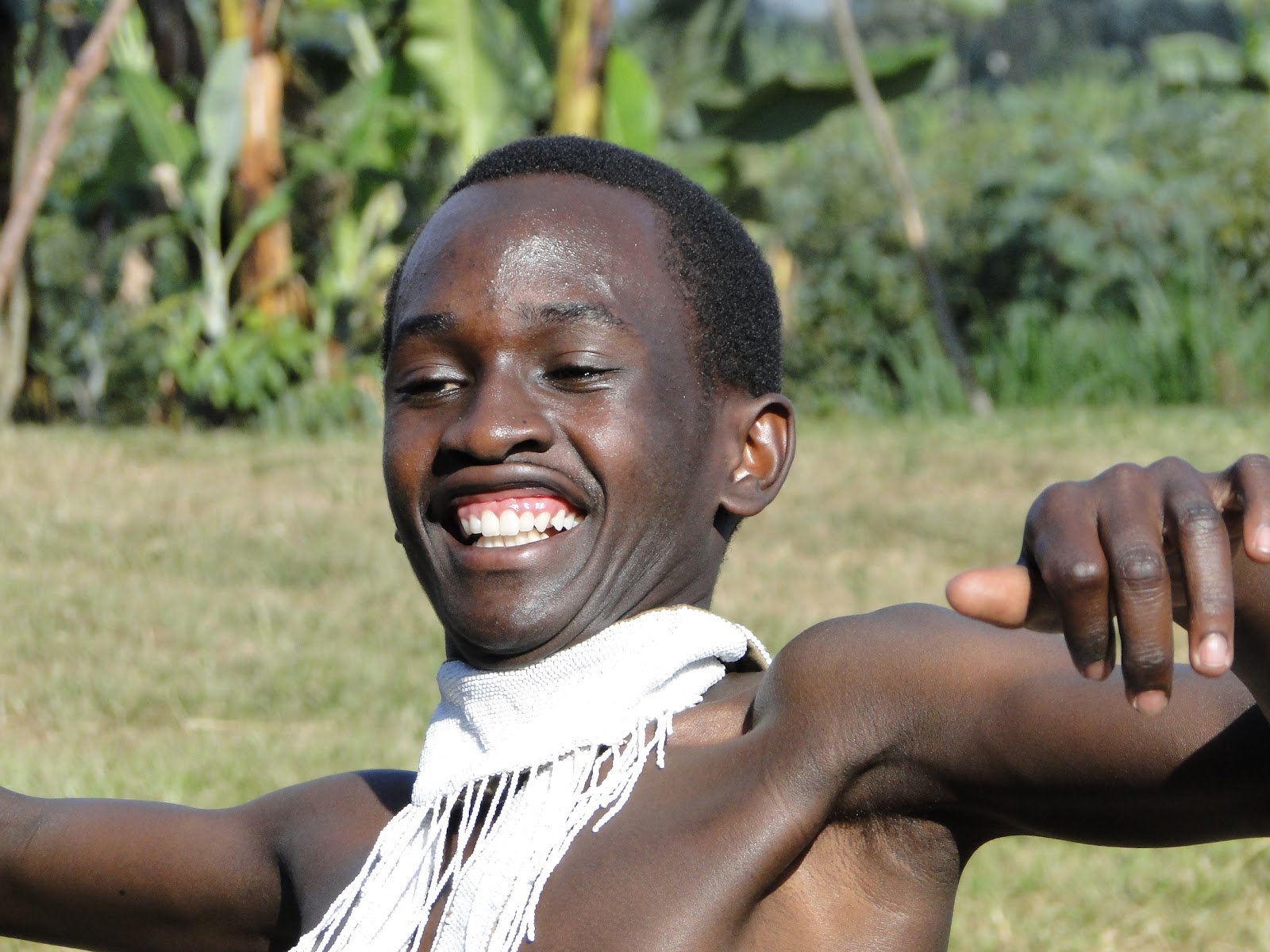
traditional Rwandan attire during a performance

Gender Week was about encouraging each and everyone in the Village to embrace who they are, love their whole selves, and hold on to the idea that gender will not stand in the way of their achievement.  The Village is comprised of 60% female, 40% male students, as that is equal to the ratio of female/male orphans in Rwanda.  Even though the females outnumber the males, there is still a male dominated overtone when it comes to achievement in school, and showcasing talent in music, dance and poetry.  The boys are far more outspoken and comfortable with their own voice, they do not shy away from trying new things, and they seemingly push themselves harder and achieve higher marks in school.  Do not get me wrong, there are some all-star females in our Village, but they are often overshadowed because they stand few and far between the boys.  Gender Week was about empowerment and bravery and being able to stand toe-to-toe against anyone, no matter their gender and have your voice be heard and your strengths shone.  It was about pushing past stereotypes and identifying what fits, not what is supposed to fit, or what has traditionally fit when it comes to gender roles.  It was about finding an inner strength and believing in yourself and your abilities, identifying your strengths, recognizing your weaknesses, and exploring your potential.  It was not about one gender being dominant over another, nor was it about equality, as men and women are not equal genders when it comes to every ability and task.  BUT, each gender has a purpose and each gender can and should achieve great things.  

a traditional painting by a first-year student
Literacy Week was all about reading.  I have been a reading fanatic since arriving in Rwanda, and for the first time in my life, I have really loved to read.  It offers a beautiful escape and adventure, while soothing my mind and soul.  On 5th October, 2012, the first ever Rwandan Public Library opened in Kigali.  In America, I believe that we take our libraries for granted and do not stop to think how many people in the world do not have access to books, let alone thousands that are housed in many of our own communities in the States.  One of my favorite conversations of the week happened during family time when my family discussed the importance of literacy for a developing country and its people, and we created a list of ways to increase the literacy among the Rwandan population.  At Agahozo, we have a small, yet adequate library housed inside a room in one of our club houses.  In my mind, we could greatly use more book donations, but even with the small amount we have, the girls in my family came up with the idea of sharing our books with the local Rubona community members.  They described a Rwandan-style book mobile concept, where we could take a wooden cart with wheels, load it with books, and go into the community to share our resources.  They talked about the danger of ignorance and how, “the more you read, the more you know.”  I loved that quote and even wrote it down in my personal journal.  The students at Agahozo understand the importance of reading and writing and have this insatiable thirst for knowledge and information.  I love looking around a room and seeing kids with books, reading to one another, asking questions, searching for answers - enjoying the gift that is literacy. 
Literacy Week came to a spectacular close with a Village-wide spelling bee where the top male and female speller from each grade battled it out for the title of top speller.  Although English is a foreign language to the students at Agahozo, and many of them have far more knowledge of two or three other languages, the vocabulary they were asked to spell was not elementary.  While sitting in the audience, spelling each word along with the contestants, I paused and thought to myself, "never did I think I would be in the audience of a spelling bee, cheering on the participants!"  I was really embracing and enjoying the moment.   

Each week has been so unique and special, and I can't help but respect how the Village stresses such important topics and lessons and infuses educational tidbits into the everyday lives of everyone who resides here.   Rwanda may be deemed a "developing country," but in some respects, it is far more developed than those at the top.  

Thursday, October 4, 2012

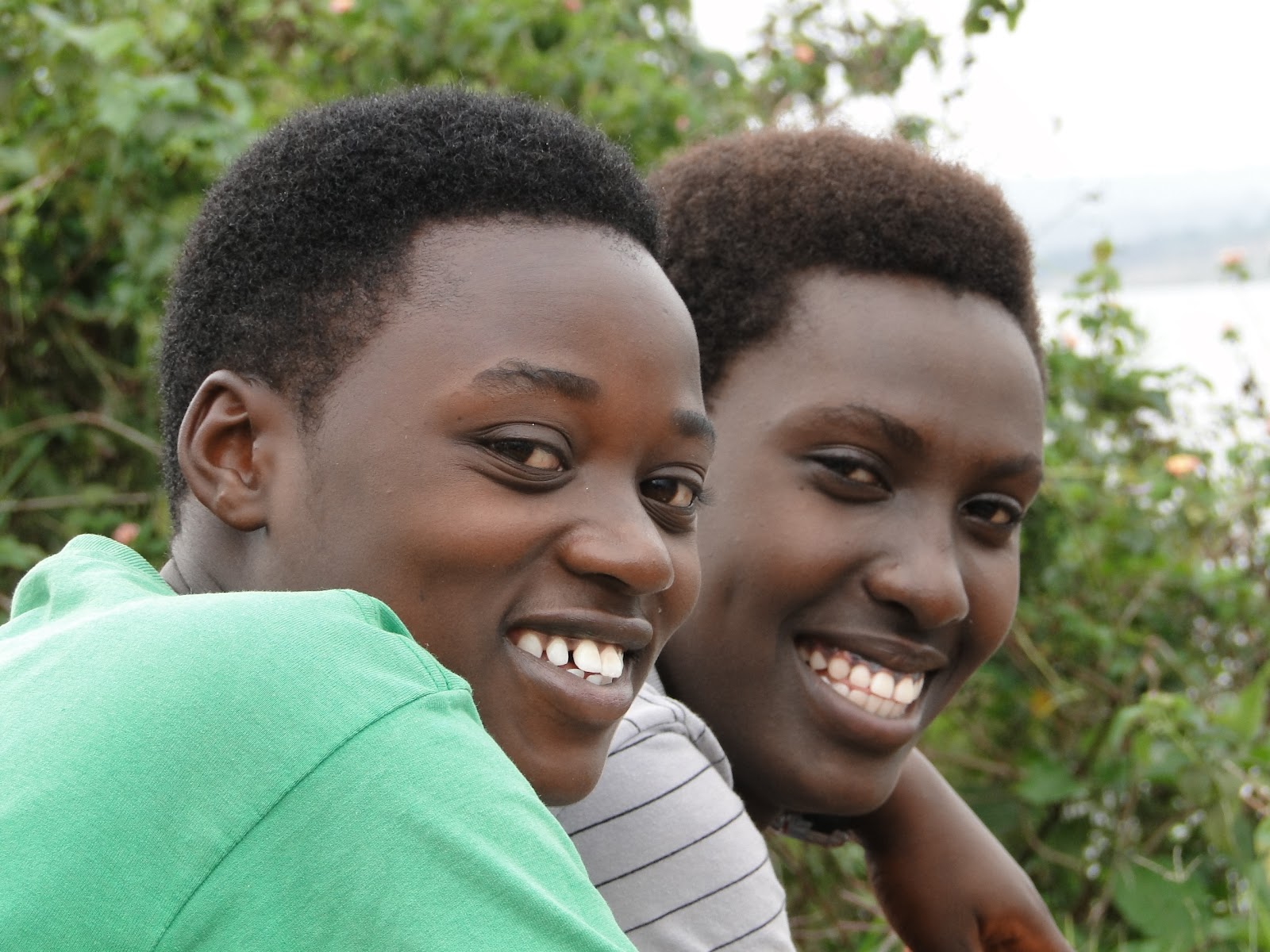
the faces I adore

This is it – the final push, the last leg of this journey.  At times it feels like I have been in Rwanda forever, but not in a bad way.  It feels normal to be here.  It feels like home, although it certainly lacks all the creature comforts of my actual home in the States (if I were to actually have a home and not have my life stockpiled in a 10x15 storage unit).  There are other times though when I look at all I have left to do while I am here and it doesn’t quite seem possible that I only have a few weeks left in this country I have grown to respect and appreciate.  Most of all, I cannot believe that my time is so limited with the kids of Agahozo.  

I spent so much of the first term observing, learning, and asking questions.  We were all somewhat thrown into this experience with a loose idea of our roles and responsibilities, and over time we have had the opportunity to more fully define our purpose here and autonomously choose how to interact with the students.  The second term was a whirlwind filled with 97 overnight guests and 67 day visitors. I was thoroughly exhausted when the term came to a close and was so thankful that I had 6 weeks to recover.   I often heard the students saying, "cousin, where have you been?  Why do I not see you?"  The truth of the matter was that very little of my time was spent with the students of Agahozo because I was tending to the needs of the various student groups from America who were volunteering their time in the Village.  Although I have far fewer visitors and guests for whom I am responsible for this term, my days seem to be busier than ever.  Writing reports and “instructions” for the next group of fellows takes up many of the morning hours and then I seem to be spending countless hours each afternoon with students helping them revise research papers (teaching them that cutting and pasting from Wikipedia does not a research paper make), tutoring English, painting fingernails, taking photos … I want to do it all and leave no stone unturned when it comes to them.   

Just yesterday I sat with one of my girls for 90 minutes as she read a story about horses to me.  It was precious time that I could not have imagined spending any other way.  (Note: when she arrived in the Village 10 months ago, she didn't know any English at all and here she is reading a book to me!)  On Monday, I taught one of my girls the song “Mama Mia” which was utterly enchanting! Each day brings new surprises and delights and I have come to cherish each and every one of them.  The students' giggles bring me joy, their never-ending questions fill me with pride, and the ways in which they show me they care make me melt.  The students at Agahozo have become my purpose in life for this term, and I have discovered how much I truly love and care about them.  While being away from the Village for 6 weeks over vacation, I realized that it is the the students in Agahozo who make each of my days complete.  They are the ones who make me laugh like a little kid again, they have helped me rediscover my silly side, and they have broken into my stoic heart and made themselves at home.  I adore them and I already dread the forthcoming farewell when they leave for term break and I leave to return to America.  

There is a facebook photo album for Agahozo-Shalom Youth Village titled "Faces of Agahozo."  These are a few of the faces I adore.


Saturday, September 29, 2012

Bunny Chow?


On the eve of the first day of my vacation, I learned that my holiday break had been extended nearly 2 weeks, so on a whim I booked a flight to Cape Town using airline miles, found an extremely cheap hotel in an amazing central location, and began planning a fourth leg to my trip.  My sister-in-laws headed home after our gorilla trekking adventure in Uganda, and I headed almost due South to a place I had always dreamed of visiting - Cape Town. 
As my driver navigated the route from the airport into the city-center where my hotel was located, the city unfolded in front of me and reminded me a bit of San Francisco.  The hills weren’t nearly as steep and the spaces weren’t nearly as crowded, but it gave off the same initial impression.  Prior to arriving, I had planned a rough outline of sights I wanted to see and activities I wanted to do for each of my 10 days in Cape Town.  I had arrived and yet another adventure had begun!
One thing that caught me a bit off-guard was how cold it was in Cape Town.  I knew that winter was coming to a close in the Southern Hemisphere, but I have been spoiled in Rwanda where our low “winter” temperature each night hovers around 62F.  I layered myself up like I was going to play in the snow with at least 4 layers each day before heading out to explore.  Side note: I don’t even want to think about what it will be like arriving back in the States in the beginning of winter! 
I have heard many things about Cape Town, but knew very little prior to researching it and planning my days.  Like most cities around the world, there is a lot to see and do, and over the course of 10 days, I nearly saw and did it all.  I won’t bore you with too many details, but instead I will highlight my favorite pieces and note some interesting observations that I made.

Highlights:
Cape Point
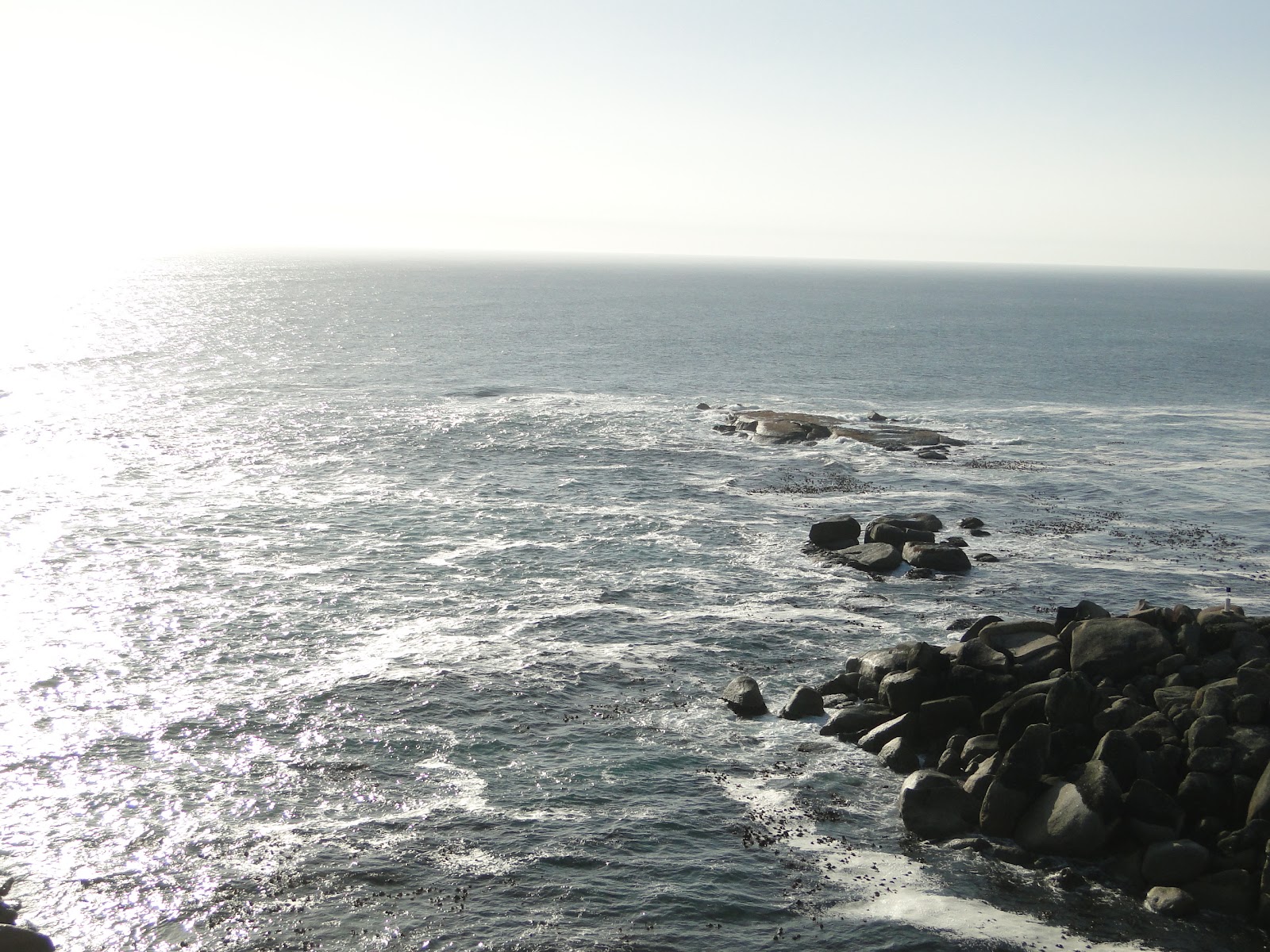
  • Point of Good Hope and Cape Point – Located roughly 50km South of Cape Town is the Cape of Good Hope.  There is a false impression that this piece of land is the most southern tip of Africa because it was once believed to be the dividing point between the Atlantic and Indian Oceans.  Although the Cape of Good Hope is not the most southern tip of the continent, it marks the point where ships begin to travel more eastward than southward when at sea.  Located about 2.3km East and a little North of the Cape of Good Hope lies the peninsula of Cape Point.  There is a major peak that dominates the skyline locally but there is also a smaller peak about 100m further south.  Atop each of the peaks stand lighthouses.  The higher, old lighthouse was replaced by the newer, lower lighthouse for two reasons - the old lighthouse could be seen 'too early' by ships rounding the point towards the east, causing them to approach too closely, and more importantly foggy conditions often persist at the higher level, making the older lighthouse invisible to shipping, and thus ineffective.

  • Greenmarket Square – Just a block and a half from my hotel was one of the city’s oldest open-air markets, set on a cobbled square.  Individual vendors, numbering near 100 in total sell clothing, jewelry, local art and every imaginable nick-knack from nearly every country in Africa.  A wonderful and  somewhat chaotic, frantic buzz filled the air each and every day.  Each seller was seemingly offering every touristy-looking person a “very special price.” I loved the energy of the place and often found myself walking through the stalls on many afternoons, not looking for anything in particular, but just enjoying the sights and sounds. 
a view inside the busy Biscuit Mill Saturday market
  • Old Biscuit Mill Market – There is a market every Saturday at this converted Biscuit Mill, which now houses unique artisan stores and restaurants.  On Saturdays, tents are erected to expand the space offered by a limited permanent structure and local food craftsmen set up stands along the walls and down a central aisle to serve the local clientele.  There is communal seating via picnic tables down the center and on bales of hay and benches surrounding squares of artificial grass.  The selection of food was immense and varied – Taiwanese, French, Italian, Mediterranean, cheese, dried meat, crepes, pizza, bagels with lox, pastas, spreads and pesto, smoothies, coffee, chocolates, ice cream... – I must have circled the market four or five times before deciding on what I would eat.  There were also fresh fruits, veggies, and flowers for sale, in addition to an area that housed a “trunk sale” of sorts with clothing, leather goods, and shoes. 
    heading up Table Mountain
  • Table Mountain – It seems that no matter where you are in Cape Town, you can always see the magnificent Table Mountain.  I spent a morning on the Mountain and was “lucky” enough to have chosen a day when there was what is locally referred to as a “table cloth” over the top of the mountain.  It was encased in a thick cloud covering that was so dense that I could not see more than 6 feet in front of me when I arrived at the summit!  After getting over my feeling of claustrophobia, I began to embrace the cloud cover and found the setting to be both serene and a bit enchanting.  I was lucky enough to be the only person interested in a guided tour, so I got a personal tour of the top of the mountain with an eccentric, somewhat creepy, yet highly informative guide.  I couldn’t help but think about my brother as the guide made one geologic reference after another and came across to me as a geologist want-to-be.  I
    above the clouds on Table Mountain
    spent two hours on the guided tour, covering a few kilometers of trail.  Over time, the table cloth cloud covering changed shape and density.  There were moments when it seemed as if I was floating above the clouds, existing in a dreamlike and fantastic world, but then within minutes I was snapped back into reality as the weather changed at the drop of a hat and in one instant it was blazingly hot with the sun beating down, and in the next instant, a blustery wind blew through and I was wishing I had a parka.  It was phenomenal and bizarre. 
    a view from atop Table Mountain after the table cloth cleared
  • Township – I had the opportunity to tour a local township called Imizamo Yethu, located in the greater Hout Bay Valley area. The 18-hectare settlement houses approximately 34,000 people with little or no infrastructure for sustainable living. The settlement has dismal water facilities with no indoor plumbing or sewage system and very few communal toilets, each shared by 5-10 households of 4-8 people.  There is a local river that runs through the settlement and reportedly has the highest level of e-coli bacteria that has ever been recorded in South Africa.  To me the living conditions were abominable, yet the residents came across as being resilient and cheery.  I spent about 90 minutes in the Township and couldn’t help but think about the kids in my Village in Rwanda who come from similar settings.  It seemed however (and I was later told that my thoughts were correct) that the most underprivileged and poverty-stricken people in Rwanda are better off than the poor people in South Africa.  The township embodied a level of poverty that was beyond belief. 
  • Botanical Gardens – Flower gardens have always made me feel relaxed and comfortable.  Although the Kirstenbosch National Botanical Gardens were not in full-bloom because of the time of year, the grounds were still captivating.  Did you know that there is a Bird of Paradise flower that was created to honor former President Nelson Mandela?  
 
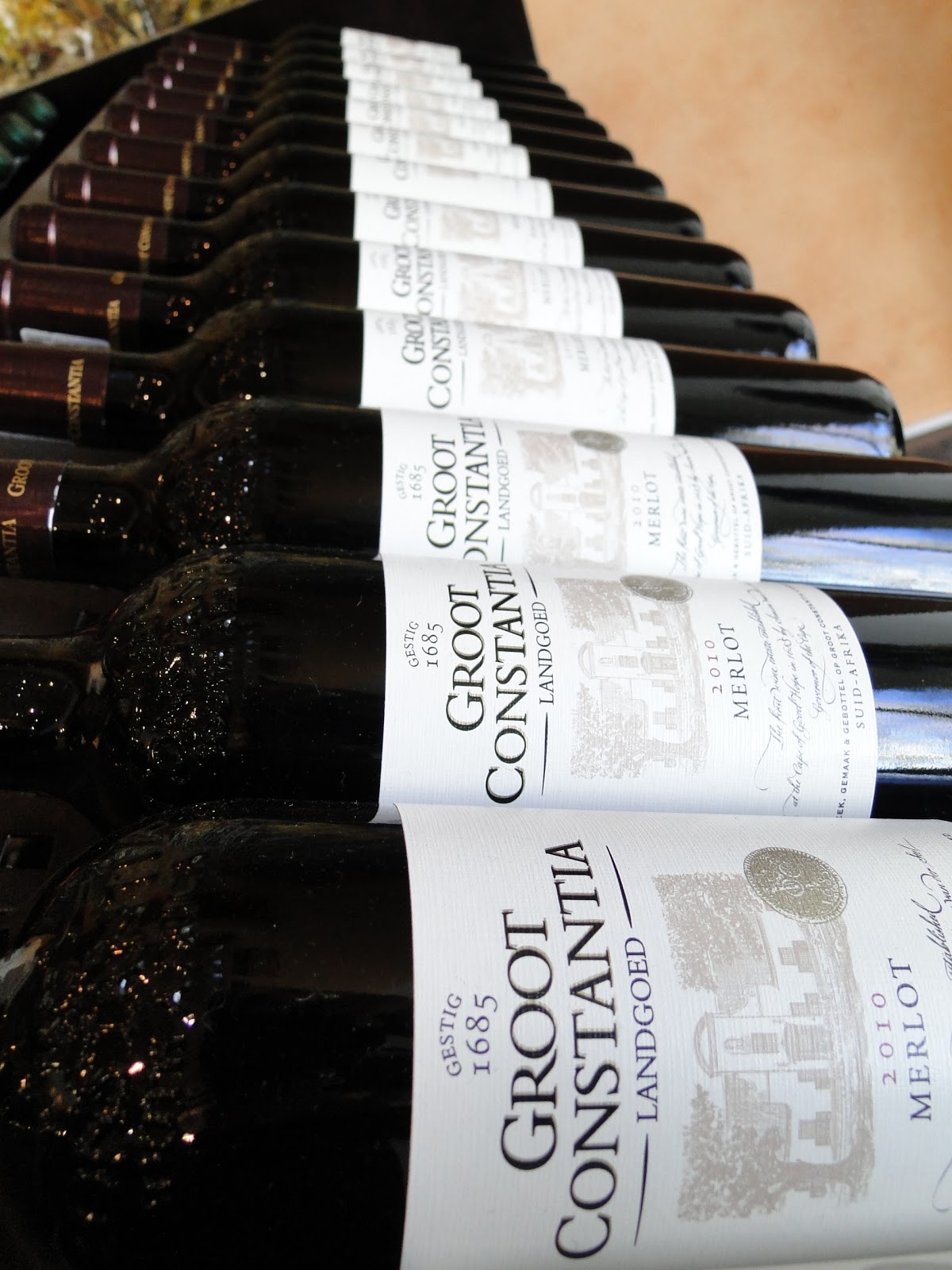
  • Winery – Similarly to Cape Point and the Cape of Good Hope, you cannot visit South Africa and NOT go to a winery.  If I were to sum up my visit to Groot Constantia winery in one word, I would choose: lovely.  The restaurant was pleasant, the grounds were open for visitors to walk around at their leisure, and the cellar tour and wine tasting was delectable! I tasted a Sauvignon Blanc, a Blanc de Noir, a Shiraz, the Gouvernerurs Reserve, and a Cape Ruby (Port).  Which was my favorite?  All of them. 
  • Eastern Food Bazaar – Located 20 steps away from my hotel was the Eastern Food Bazaar, a food court-like establishment with 10 eateries over 80 menu items from which to choose.  It was a gem of a find!  The best part, aside from the scrumptious food was the fact that I never paid more than USD$5 for a complete meal (drink and gelato included!)  My favorites: Falafel and the local “street food” known as bunny chow which is a hollowed-out ½ loaf of bread, filled with a curry dish.  WOW!  My mouth is watering just writing about it :)
Surprises:
Having traveled quite extensively, I have found that my favorite and the most welcoming people reside in Scotland.  I have found the most spirited, cultural people in Tanzania, and I found South Africans to be some of my least favorite people I have crossed paths with during my travels.  It is just a personal point of view and I learned long ago that I do not have to like everyone and I do not have to try to win over the favor of everyone in a quest to have them like me.  People are who they are, and I found South Africans in Cape Town and the surrounding area to have a bit of an air about them as they often present themselves as elitist, superior to anyone and everyone.  Through many conversations I uncovered that they really don’t like anyone and seem to have an opinion on and criticism for every person from every place.  It was interesting in a sociological sort of way.  I especially found it interesting to see Cape Town-ians’ reactions when I told them that I was living in Rwanda.  Although just a few countries removed, everyone’s reaction made it seem as if Rwanda was an entire world away, filled with danger, risk, and untamed, uncultivated people.  They seemed somewhat perplexed and horrified as to why I had CHOSEN to live in Rwanda instead of say, staying within the boarders of “safe” America (although they had plenty of criticism about America too!).  I could have just let their comments be, as I have learned the value of biting my tongue since beginning this African journey, however I have also come to embrace Rwanda as my home and after the first few pitiless comments, I took it upon myself to inform and educate them about the Rwanda of today.  I did not lecture them or force my opinions on them, but rather update them on the vast developments that have happened in-country and the makeup of the population.   After some carefully selected commentary about Rwanda I slid in an extra statement of comparison.  I’ll just say that I did not win too many fans over when I told them outright that I feel safer at any hour of the day or night in Rwanda than I do in the middle of the day in Cape Town.  It was the truth, and if there is one thing I pride myself on, it is being brutally honest when I am trying to make a point.  Point made. 
The other surprise that Cape Town thrust upon me was the racially divided neighborhoods that are still very much a reality more than two decades after apartheid ended.  It is a piece of Cape Town that most tourists do not see, and most likely it is a part that they do not want to see.  I had the privilege of touring a “black” neighborhood (see township section above) that was just across the street from a much nicer “white” neighborhood and just down the block from the “colored” neighborhood that was not as pleasant as the white one, but a vast improvement over the black settlement.  The “color” classifications still exist and the differences between the communities are striking and somewhat horrifying in an appalling way.  At one point I just stood in the middle of the black neighborhood, staring at the communal 1-stall toilet as a troop of white girls belonging to the local equestrian club rode by on their horses.  I struggled trying to figure out how this separation and segregation was still in existence in a newly industrialized country in the year 2012.  I was dumbfounded and dismayed.

Was Cape Town everything I had hoped it would be?  That’s hard to say because I live in a seemingly perpetual state of not having expectations, so it is difficult to judge how something measures up against that which I don’t formulate.  It was spectacular in so many ways, and really educational and eye-opening.  I feel as though I see the world through a new set of eyes since living in Rwanda, and having this new perspective gives me the opportunity to open myself up to a new way of thinking, questioning, and evaluating that which I see and experience.  It was a great trip!

A few other favorite photos from South Africa:
inside The Great Synagogue
some of the colorful houses in Bo-Kaap
Hout Bay Harbor
a view from Chapmans Peak Drive